
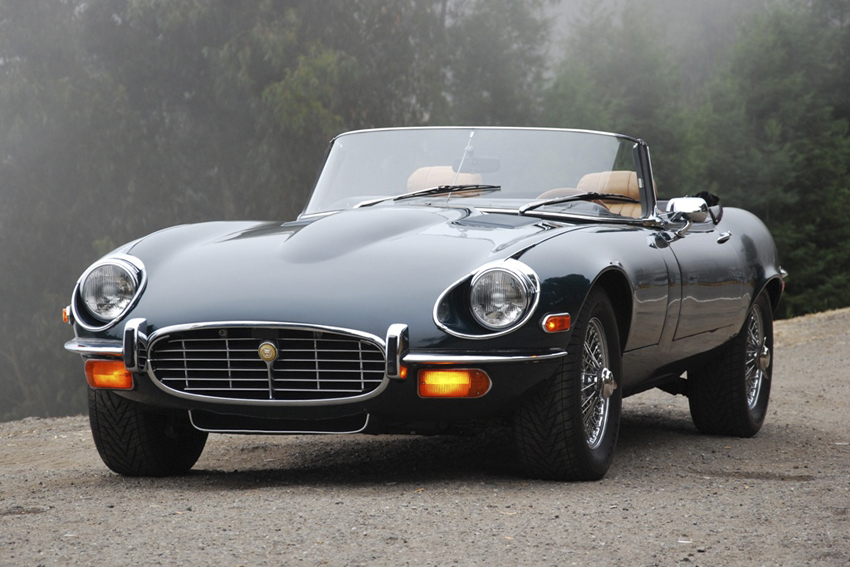
Introduction – 1974 Jaguar E-Type Series III
The 1974 Jaguar E-Type Series III marked the final year of production for one of the most iconic and celebrated sports cars of the 20th century. The ’74 model continued the elegance, performance, and innovative spirit that characterized the E-Type during its 14-year production run. Here we’ll explore the history, design, racing legacy, technological advancements, and cultural impact of the 1974 Series III.
Design
Exterior Design
A work of art sculpted by Malcolm Sayer, the ’74 model’s exterior retained the iconic long bonnet, larger grille, flared arches, and quad exhaust pipes that became synonymous with the Series III.
Interior Design
The 1974 Series III’s interior featured luxurious leather, wood accents, and a dashboard layout designed with both aesthetics and functionality in mind, encapsulating Jaguar’s emphasis on comfort and sophistication.
Engine and Performance
The Majestic V12 Engine
The 5.3-liter V12 engine remained the heart and soul of the ’74 model, delivering 272 hp. The engineering brilliance of Walter Hassan and Harry Mundy ensured that the E-Type continued to captivate drivers with its performance.
Transmission Options
The choice between a 4-speed manual and 3-speed automatic transmission allowed for personalization of the driving experience, appealing to various driving styles.
Racing History
Final Bows on the Racetrack
By 1974, the E-Type’s presence in competitive racing had waned due to technological advancements in racing cars. However, it continued to be celebrated in historic and classic car races, preserving its legacy as a formidable sports car.
A Legacy Preserved
The E-Type’s success in the 1960s continued to resonate in 1974, and its impact on racing culture and automotive design remained influential.
Innovations and Technological Advancements
Cooling System
The advanced cooling system featuring a more efficient radiator and fan setup from earlier models remained an essential part of the ’74 model, allowing for optimal engine performance.
Suspension and Handling
Refinements in the independent coil spring rear suspension and anti-roll bars enhanced the ’74 model’s handling, ensuring a superb driving experience.
Safety Considerations
The 1974 model year included further improvements in safety, such as enhanced seat belts and braking systems, reflecting Jaguar’s ongoing commitment to driver safety.
Variants and Special Models – 1974 Jaguar E-Type Series III
The Final Roadster and 2+2 Coupe
The ’74 Series III offered both Roadster and 2+2 Coupe variants. The Coupe featured more space, while the Roadster continued to allure those seeking open-top driving pleasure.
Global Impact and Cultural Influence
Worldwide Appeal
Even as the E-Type neared the end of its production, it remained a global icon, with sales in various markets including the U.S., Europe, and beyond.
Cultural Legacy
The 1974 E-Type’s appearances in films, commercials, and other media only added to its legend. Its influence on automotive design and popular culture cannot be overstated.
Preservation and Collectibility
Today, the 1974 Series III holds a special place among collectors, symbolizing the end of an era. Restoration and preservation efforts ensure that this classic continues to shine, both on the road and in exhibitions.
Conclusion: A Farewell to a Legend – 1974 Jaguar E-Type Series III
The 1974 Jaguar E-Type Series III serves as a poignant farewell to a vehicle that defined an era. Malcolm Sayer’s iconic design continued to dazzle, while the V12 engine, engineered by Walter Hassan and Harry Mundy, ensured that performance remained at the forefront.
While its racing presence had diminished by 1974, the E-Type’s impact on motorsports and the echoes of its earlier victories still resonated in automotive circles. The technological innovations in cooling, suspension, and safety showcased Jaguar’s commitment to excellence.
The car’s appeal transcended borders, and its cultural influence extended far beyond the automotive world. As the final edition of the E-Type, the 1974 model holds a unique place in history.
Want to value, sell, consign or trade your classic 1974 Jaguar XKE E-Type then email us at info@westcoastclassics.com or call us on 310-399-3990.