

Renowned for its bold styling, whisper-quiet powertrains, and commanding road presence, Lincoln produced some of the most sought-after collector cars in the world. Whether you own a pre-war classic or the iconic suicide-door Continental from the 1960s, classic Lincolns represent pinnacle luxury and timeless craftsmanship.
Production Numbers:
Lincoln focused on exclusivity, engineering prestige, and executive appeal rather than mass-market volume. Across its most celebrated model runs, production figures highlight this balance of luxury and rarity:
- 1940–1948 Lincoln Continental (First Generation): 5,324 units built across its entire inaugural generation.
- 1956–1957 Continental Mark II: 3,005 hand-crafted coupes produced (2,550 built in 1956 and 444 in 1957), making it one of the rarest post-war production luxury cars in the United States.
- 1961 Lincoln Continental (Fourth Generation Launch): 25,160 total units, broken down into 22,303 four-door sedans and just 2,857 four-door convertibles.
- 1961–1969 Lincoln Continental (Fourth Generation Total): Approximately 334,345 total units produced over its iconic nine-year run.
Color Combinations:
Classic Lincoln vehicles were celebrated for their refined, stately palettes paired with deeply coordinated, high-grade interiors:
- Exterior Finishes: Presidential Black, Royal Red Poly, Turquoise Mist, Saxon Green Poly, Blue Haze, Sunburst Yellow, Platinum, Ermine White, and Rose Poly.
- Interior Trims: Rich, deep-grain Bridge of Weir top-grain leathers, broadcloth, and pleated nylon weaves. Popular interior combinations included Monochromatic Black leather, Pearl White leather, Deep Aqua/Light Turquoise two-tone, Dark Ivy Gold, and Crimson Red. Convertible soft tops were commonly matched in Black, White, or Slate Blue.
Engine Type:
Throughout Lincoln’s golden eras, smooth power delivery was paramount:
- 1936–1948 (Lincoln-Zephyr & Early Continental): 267 to 305 cu in (4.4L to 5.0L) Flathead V-12 delivering 110 to 130 hp.
- 1956–1957 (Continental Mark II): 368 cu in (6.0L) Lincoln Y-Block V-8 outputting 285 to 300 hp.
- 1961–1965 (Fourth Gen Continental): 430 cu in (7.0L) MEL overhead-valve V-8 with a four-barrel carburetor, producing 300 to 320 gross hp and 465 lb-ft of torque.
- 1966–1969 (Fourth Gen Continental updates): 462 cu in (7.6L) MEL V-8 producing 340 hp, transitioned in 1968½ to the 460 cu in (7.5L) 385-series V-8 generating 365 hp.
Transmission:
- Pre-War / Early Post-War (1936–1948): 3-speed sliding gear manual transmission, frequently paired with a Columbia 2-speed overdrive rear axle.
- 1956–1957 (Mark II): 3-speed Turbo-Drive automatic with torque converter.
- 1961–1965 (Continental): 3-speed Twin-Range Turbo-Drive automatic.
- 1966–1969 (Continental): 3-speed C6 Select-Shift heavy-duty automatic, renowned for smooth and durable gear transitions.
Additional Stats:
- Wheelbase: 123.0 inches (1961–1963) expanded to 126.0 inches (1964–1969).
- Overall Length: 212.4 inches (1961) to 224.2 inches (1969).
- Curb Weight: 4,927 lbs to 5,711 lbs (convertibles averaged 5,300+ lbs due to underbody structural cross-bracing).
- Fuel Capacity: 20.9 to 25.5 gallons.
- Brakes: Power-assisted hydraulic 11-inch drums (front/rear), upgraded in 1965 to front power disc brakes as standard equipment.
- Electrical System: 12-volt system with complex hydraulic/electro-mechanical mechanisms operating the power rear-hinged doors, power windows, and automated convertible top.
Detailed Car Description:
The Lincoln marque has always been synonymous with executive stature, bespoke luxury, and uncompromised mid-century design. Founded in 1917 by Henry Leland and acquired by Henry and Edsel Ford in 1922, Lincoln became Ford Motor Company’s premier luxury division, rivaling Cadillac and Packard for dominance in high-society driveways.
The definitive zenith of the marque arrived in 1961 under the design direction of Elwood Engel. Abandoning the exaggerated tailfins and heavy chrome garnishes that defined the late 1950s, the fourth-generation Lincoln Continental debuted with clean, slab-sided body lines, subtle blade fenders, and a subdued, dignified silhouette. Its most famous defining feature was the center-opening passenger doors—popularly dubbed “suicide doors”—which allowed effortless, dignified entry and exit for rear-seat passengers.
The fourth-generation Continental was offered as a four-door sedan and an extraordinary four-door convertible featuring a fully automatic disappearing soft top that folded seamlessly beneath the reverse-opening trunk lid. Inside, the cabin served as a sanctuary of mid-century modern architecture: walnut veneer accents, brushed stainless trim, thick cut-pile carpeting, and deep-cushioned bench seating engineered for total vibration isolation.
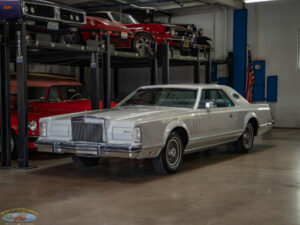
Each Continental was individually test-driven for miles before leaving the Wixom assembly plant, setting standard-setting benchmarks for American manufacturing quality control. Today, vintage Lincolns—from the graceful 1940s Zephyr Continentals to the Kennedy-era 1960s convertibles and the majestic 1970s Mark series—command intense interest among serious collectors, restoration specialists, and classic car enthusiasts worldwide.
Ready to Sell Your Classic Lincoln?
Selling a vintage luxury vehicle requires deep market knowledge, authentic historical appreciation, and a seamless transaction process. If you have a classic Lincoln sitting in your garage, part of an estate, or ready for its next caretaker, we make the selling experience effortless.
We purchase classic Lincoln models and other American cars nationwide in any condition—from pristine concourse-quality survivors and custom showstoppers to barn finds and restoration projects. Get an honest, competitive cash offer today and let our experienced team handle all transportation, paperwork, and logistical details directly.